
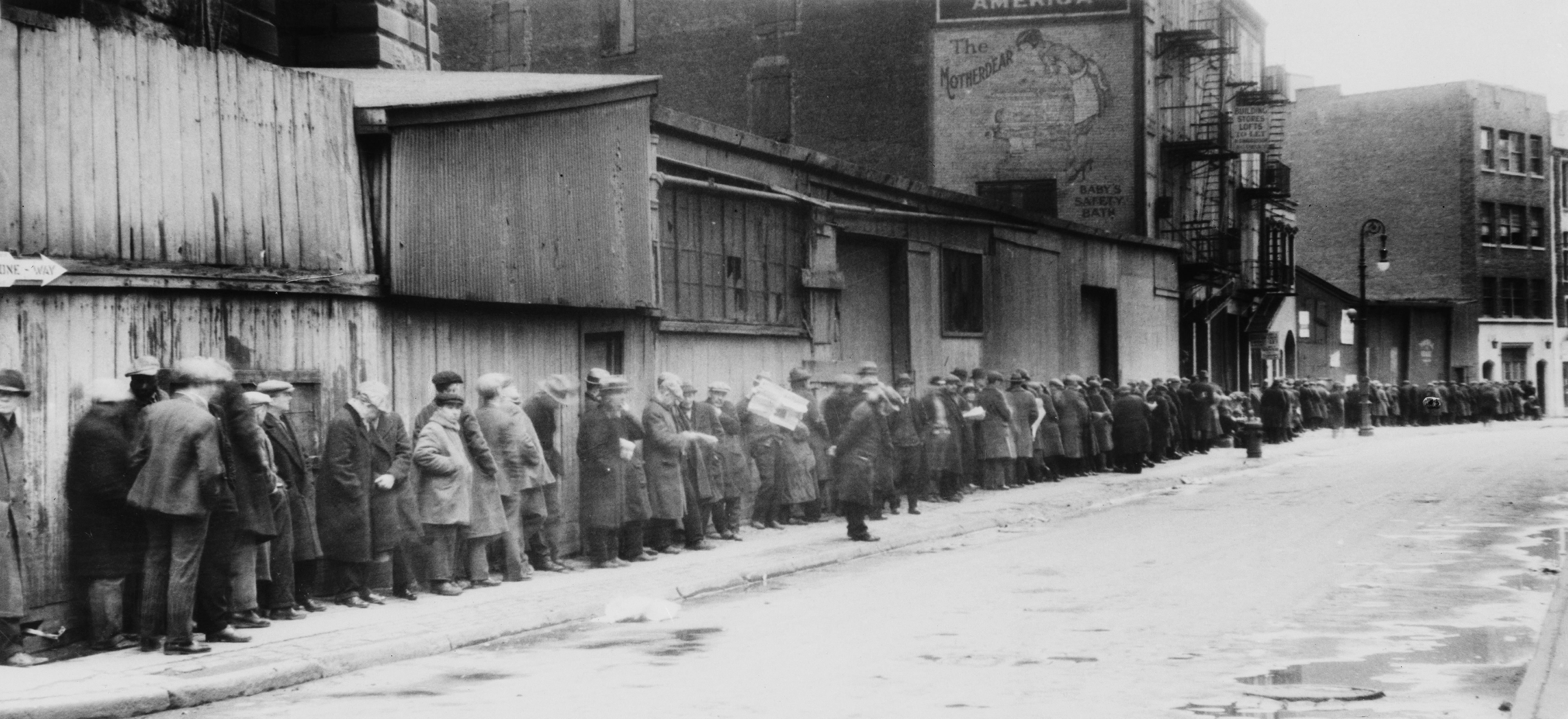
Breadline at McCauley Water Street Mission under Brooklyn Bridge, New York, c. 1930 – 1934 (Library of Congress)
Social Safety Net News
Gov. Moore directs $10 million towards food banks amid cuts to SNAP
BY SANDRA SMITH | CAPITAL NEWS SERVICE
Gov. Wes Moore declared a state of emergency on Oct. 30, two days ahead of the cuts to Maryland’s Supplemental Nutrition Assistance Program (SNAP).
Moore is directing $10 million in emergency funds from the Fiscal Responsibility Fund to support food banks, pantries, schools and mobile distribution programs. The funds will be used to purchase and distribute additional food, in an effort to support SNAP recipients.
“The federal government is looking them in the eyes and saying ‘You’re on your own,’” said Gov. Moore in a press release. “But in Maryland, we protect our people. It’s not the work of a single day or a single announcement. It’s an ongoing pledge—one that we refuse to abandon or abridge.”
The state of Maryland will not fund SNAP benefits – which are ending on Nov. 1 due to the federal government shutdown – leaving 680,000 residents, including 270,000 children, without monthly benefits.
Across the U.S., around 42 million individuals could be affected by the cuts to SNAP.
Maryland is one of 25 states that will not use state funds to continue SNAP during the shutdown.
“The Maryland Treasury holds roughly $3.5 billion in short-term cash to help bridge reimbursable federal expenses and myriad other State expenses, but we do not have confidence that the Trump Administration will reimburse us – not only for SNAP, but for any federal programs that may suffer for the duration of this senseless shutdown,” Gov. Moore said in a press release on Oct. 24.
SNAP recipients in Maryland receive an average of $180 per month according to the Center on Budget and Policy Priorities. The data shows that 59% of participants are in families with children, 32% are in families with older adults or are disabled and over 39% are in working families.
Maryland Food Bank, a non-profit organization with nearly 800 partners, distributes food to pantries, soup kitchens, shelters and faith-based organizations statewide, excluding Prince George’s and Montgomery Counties.
Meg Kimmel, President and CEO of the Maryland Food Bank, said the organization will purchase around $3 million in food to support those losing SNAP benefits, focusing on their grocery delivery program through Amazon Flex.
The Maryland Food Bank’s “Find Food” webpage has seen its highest traffic in years, reflecting the rising demand for food in lower-income communities.
Moore announced he will provide food banks, pantries, schools and mobile distribution programs with a $10 million emergency fund to address the SNAP crisis.
Democratic leaders from 25 states and the District of Columbia, including Maryland, filed a lawsuit against the Trump Administration and the U.S. Department of Agriculture on Tuesday, arguing that suspending SNAP funding is unlawful.
Alaysia Ezzard contributed to this article.
More Media
"Established in 1964 by President Lyndon B. Johnson, the Supplemental Nutrition Assistance Program (SNAP), also known as food stamps, is the United States largest anti-hunger program, helping an average of 41.7 million — or 1 in 8 — Americans per month."
Morgan Coulson, Johns Hopkins Bloomberg School of Public Health
"What is SNAP? And Why Does It Matter?"
"If the prospect of people going hungry doesn’t move you, consider some of the other beneficiaries of SNAP. Like Walmart, Amazon, McDonald’s and other titans of Corporate America whose profits rely on workers who are paid low wages – such low wages that without SNAP, they couldn’t afford food."
Allison Morrow, CNN
"SNAP isn't just a moral imperative. It's good for business, too."

"Supermarkets and superstores, such as Walmart and Target, together make up about 15% of SNAP-accepting establishments, but they accounted for nearly 74% of all redemptions."
Drew DeSilver, Pew Research Center
"What the data says about food stamps in the U.S."
Private Sector Archives
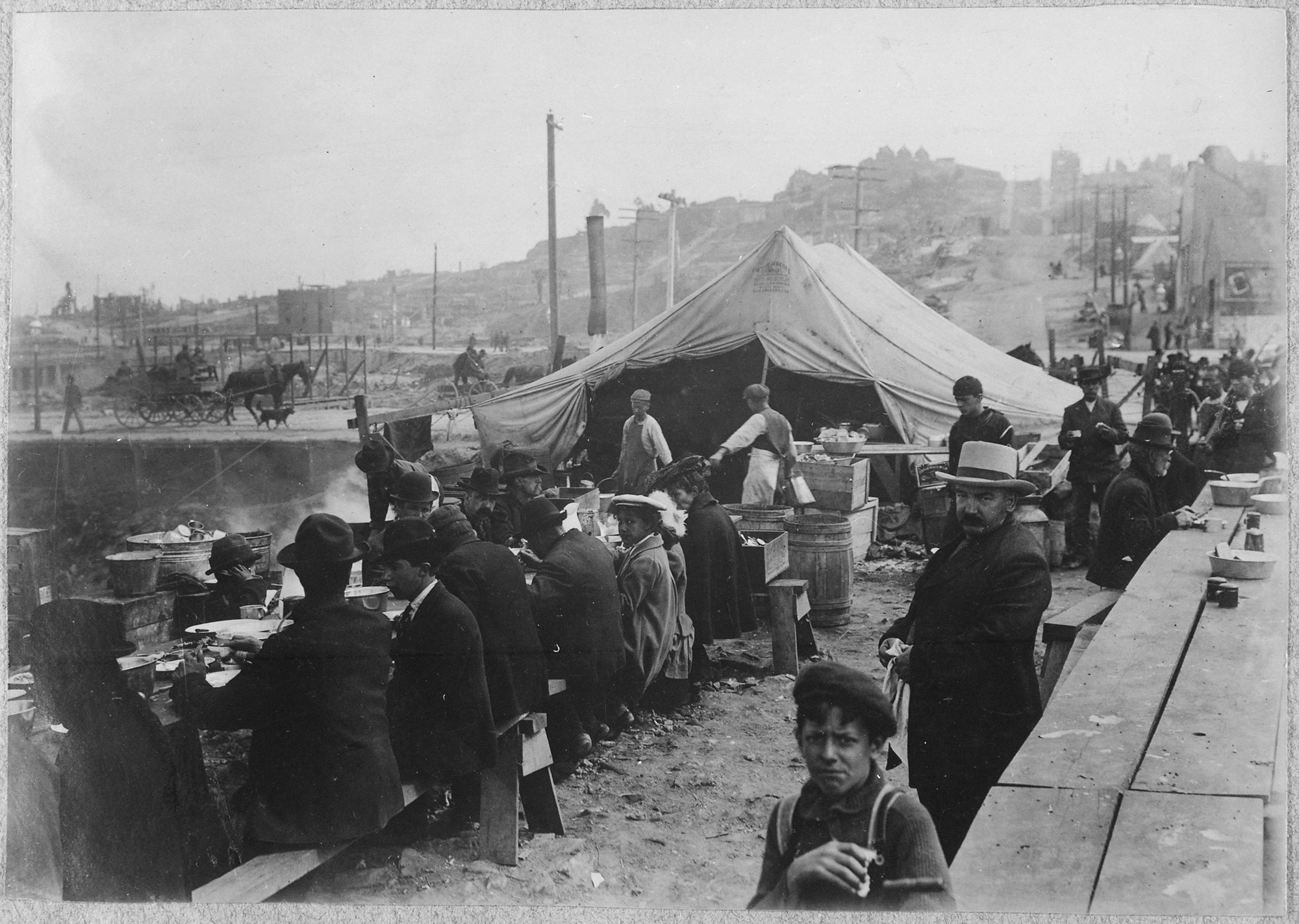
San Francisco Earthquake of 1906, Hot meal kitchen (George W. Haley/Wikimedia Commons)
Stories We Love — Read about about the emergency soup kitchen formed by Mrs. Anna Amelia Holshouser in the wake of San Francisco's catastrophic 1906 earthquake, "with one tin can to drink from and one pie plate to eat from," and other charitable efforts born from catastrophe in A Paradise Built in Hell: The Extraordinary Communities that Arise in Disaster by Rebecca Solnit, available at discerning bookstores and fine libraries everywhere.
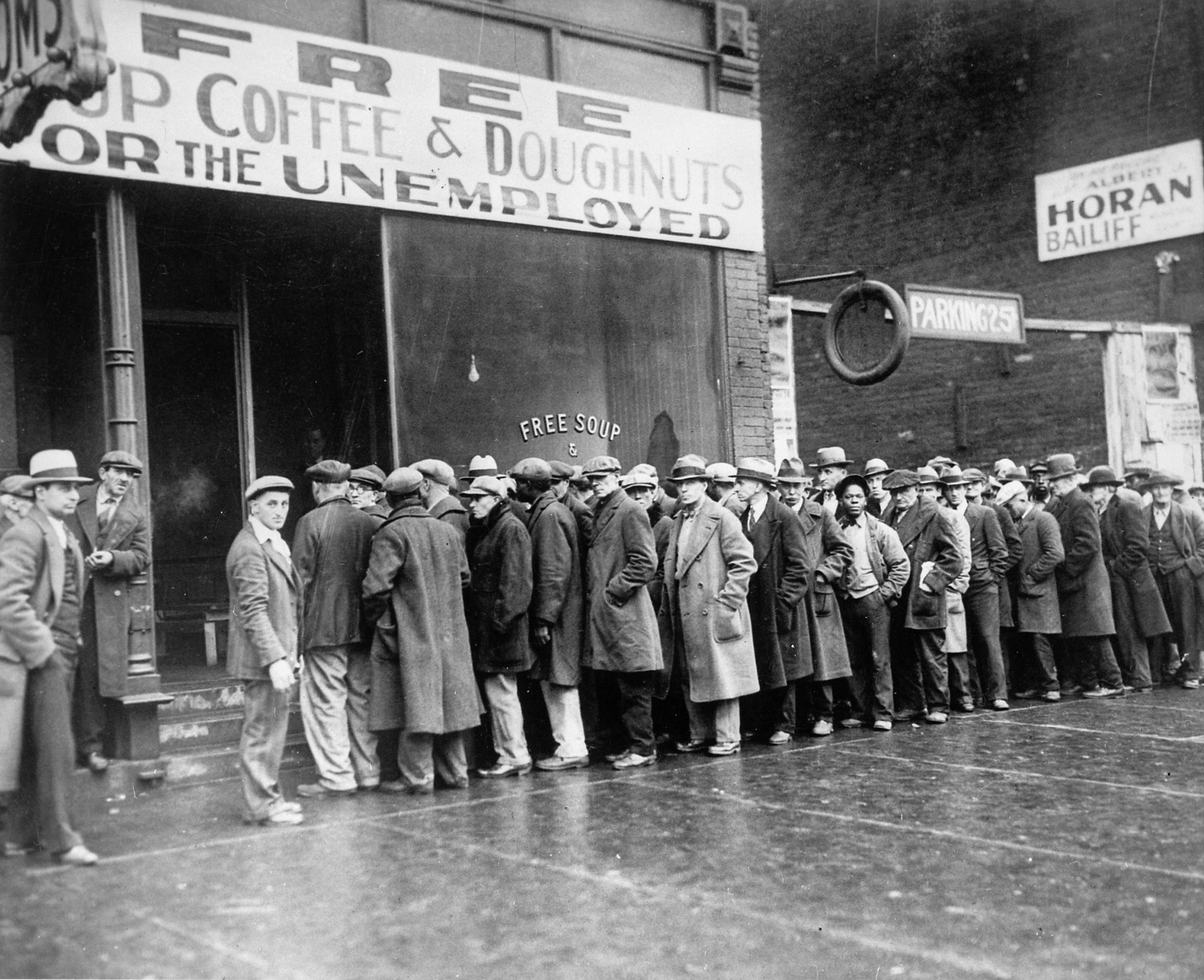
Unemployed men queued outside a depression era soup kitchen opened in Chicago by Al Capone, 1931 (Wikimedia Commons/National Archives)
"During the Great Depression preceding the passage of the Social Security Act, "soup kitchens" provided the only meals some unemployed Americans had. This particular soup kitchen was sponsored by the Chicago gangster Al Capone." — Social Security, ssa.gov
In Conclusion —
Louis M. Glackens, “Hard Times,” printed in Puck, v. 63, no. 1623, April 8, 1908, N.Y.: J. Ottmann Lith. Co. (Library of Congress)
Puck (1877 - 1918) was the first successful humor magazine in the United States of colorful cartoons, caricatures, and political satire of the issues of the day. This illustration shows Uncle Sam working at the "Free Pie Kitchen" offering daily distribution of free pies labeled "Long Term Franchise," "Graft Tariff," "Land Grant," and "Special Privilege" to crooked businessmen labeled "Public Service Corporation," "Infant Industry," "Trust," "Public Land Thief," and "Predatory Wealth" standing in a long line or already enjoying their "Free" pies.